
Introduction
The architecture of a Project Management Information System (PMIS) defines the structural design through which project information is collected, processed, stored, and distributed across an organization.
A well‑designed PMIS architecture ensures that project data flows efficiently between people, processes, and technologies, enabling reliable decision‑making and effective project governance.
Unlike standalone project management tools, a PMIS architecture typically integrates multiple systems, data sources, and digital platforms. It therefore acts as a central information infrastructure supporting projects, programs, portfolios, and strategic decision‑making.
Modern PMIS architectures increasingly incorporate cloud platforms, integrated enterprise systems, data analytics platforms, and artificial intelligence tools, transforming PMIS from simple reporting systems into intelligent project information ecosystems.
1. Architectural Foundations of PMIS
PMIS architecture is built on principles derived from information systems architecture, enterprise architecture, and data management frameworks.
The primary goals of PMIS architecture include:
• Ensuring reliable project information flows
• Integrating project data from multiple systems
• Supporting real‑time monitoring and reporting
• Enabling decision‑support capabilities
• Ensuring scalability and flexibility
A well‑structured architecture enables organizations to support multiple projects simultaneously while maintaining data consistency, transparency, and governance.
2. Core Architectural Layers of PMIS
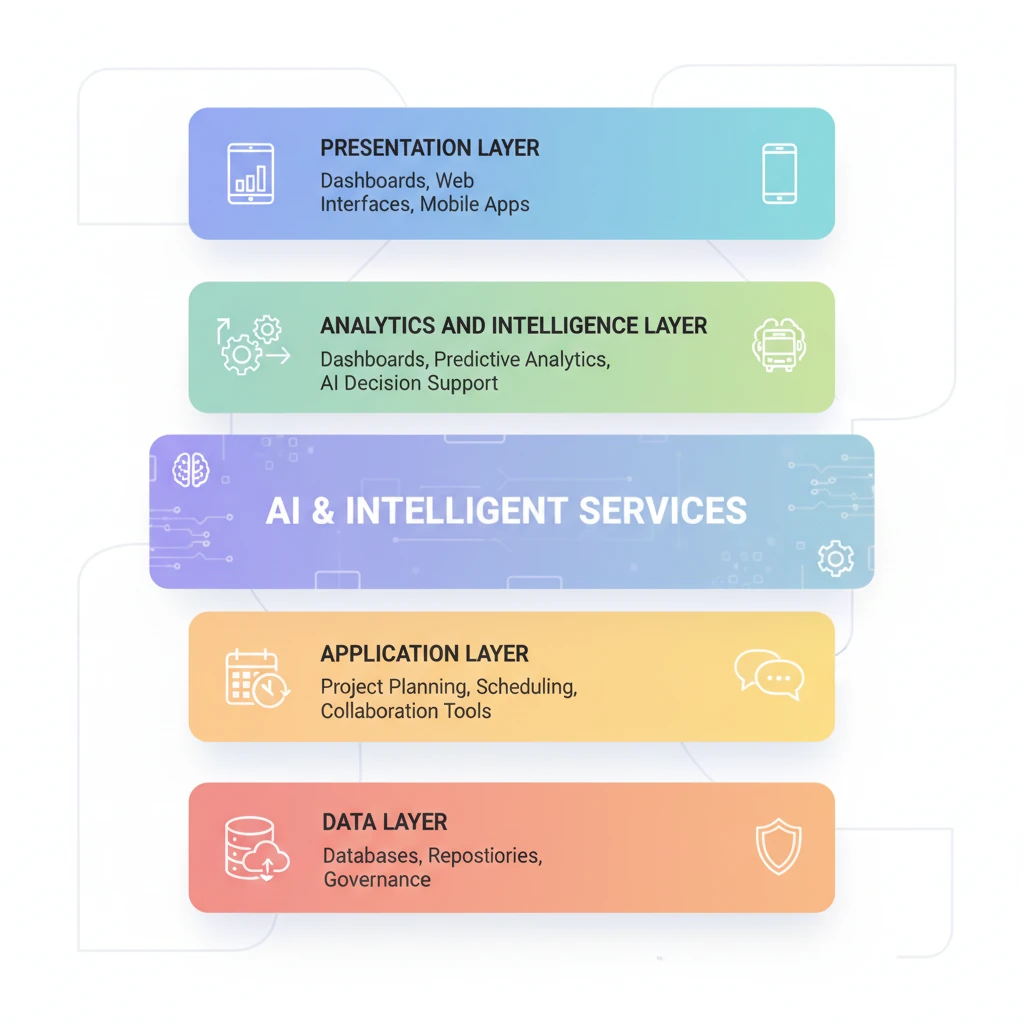
Most PMIS implementations can be understood through a layered architecture model. Each layer performs a specific role within the information ecosystem.
2.1 Data Layer
The data layer forms the foundation of the PMIS architecture.
It is responsible for storing and managing project‑related data such as:
• project schedules
• cost and budget information
• resource allocations
• risk registers
• issue logs
• project documentation
• performance metrics
Databases within this layer may include:
• relational databases
• document repositories
• data warehouses
• knowledge repositories
Proper data governance mechanisms ensure that project data remains consistent, accurate, and secure.
2.2 Application Layer
The application layer includes the software systems that support project management activities.
These applications typically include:
• project planning tools
• scheduling systems
• risk management systems
• collaboration platforms
• document management systems
• portfolio management tools
Common examples of PMIS software platforms include:
• Microsoft Project / Project Online
• Primavera P6
• Jira / Agile management tools
• enterprise collaboration systems
• portfolio management platforms
This layer provides the operational capabilities that allow project teams to plan, execute, and monitor projects.
2.3 Integration Layer
Modern organizations rarely rely on a single system for managing projects. Instead, multiple enterprise systems must work together.
The integration layer connects the PMIS with other organizational systems such as:
• ERP systems
• financial management systems
• human resource systems
• procurement systems
• document management platforms
• business intelligence systems
Integration technologies may include:
• APIs
• middleware platforms
• enterprise service buses
• data synchronization mechanisms
This layer ensures that information flows seamlessly across the organization without creating data silos.
2.4 Analytics and Intelligence Layer
The analytics layer transforms raw project data into actionable insights.
Capabilities within this layer include:
• project performance dashboards
• earned value analysis
• predictive analytics
• portfolio performance analysis
• risk trend analysis
Modern PMIS environments increasingly rely on advanced analytics and machine learning techniques to detect patterns and forecast project outcomes.
2.5 Presentation and User Interface Layer
The presentation layer represents the interaction point between users and the PMIS.
Typical interfaces include:
• web dashboards
• executive reporting portals
• project team collaboration interfaces
• mobile applications
• visual analytics platforms
A well‑designed interface improves usability and ensures that stakeholders receive the information relevant to their roles.
3. Role of Artificial Intelligence in PMIS Architecture
Artificial Intelligence is increasingly becoming an important component of modern PMIS architectures.
AI technologies enhance PMIS capabilities by enabling systems to analyze large volumes of project data and generate intelligent insights.
Key AI applications within PMIS include:
Predictive Analytics
Machine learning models can analyze historical project data to predict:
• schedule delays
• cost overruns
• risk escalation
• resource shortages
This allows project managers to take proactive corrective actions.
Intelligent Decision Support
AI‑driven decision support systems can recommend optimal project strategies, resource allocations, and risk mitigation actions based on data patterns.
Natural Language Processing (NLP)
NLP technologies allow PMIS platforms to analyze unstructured project information such as:
• project reports
• meeting minutes
• stakeholder communications
• issue descriptions
This enables automated information extraction and knowledge discovery.
Task Automation
AI can automate repetitive project management tasks such as:
• schedule updates
• risk classification
• report generation
• anomaly detection in project data
By automating routine activities, AI allows project managers to focus on strategic and leadership tasks.
4. Cloud‑Based PMIS Architecture
Many organizations are transitioning from traditional on‑premise systems to cloud‑based PMIS architectures.
Cloud environments provide several advantages:
• scalability
• real‑time accessibility
• easier integration with other platforms
• lower infrastructure costs
• improved collaboration
Cloud PMIS platforms support distributed project teams and enable global project coordination.
5. Security and Governance in PMIS Architecture
Because PMIS platforms manage critical project and organizational information, security and governance are essential architectural considerations.
Important mechanisms include:
• access control policies
• role‑based permissions
• data encryption
• audit trails
• compliance with organizational standards
Strong governance mechanisms ensure that project information remains secure, reliable, and trustworthy.
6. The Relationship Between PMIS Architecture and Enterprise Architecture
PMIS architecture should not exist in isolation. Instead, it should align with the organization’s enterprise architecture framework.
Alignment ensures that:
• project systems integrate with enterprise platforms
• data standards remain consistent across systems
• organizational information flows remain coordinated
• technology investments support strategic objectives
Through this alignment, PMIS becomes part of the organization’s digital transformation infrastructure.
7. Conceptual Model of PMIS Architecture
A simplified conceptual model of PMIS architecture can be described as a multi‑layer system consisting of:
- Data Layer
- Application Layer
- Integration Layer
- Analytics and Intelligence Layer
- Presentation Layer
Artificial intelligence capabilities may interact with multiple layers, particularly analytics, integration, and decision support functions.
This layered architecture ensures that PMIS systems remain scalable, flexible, and capable of evolving with technological advances.
8. Summary
PMIS architecture defines the structural framework through which project information systems operate within organizations.
By integrating data management structures, application platforms, system integration mechanisms, and analytical capabilities, PMIS architecture enables organizations to manage project information efficiently and support informed decision‑making.
Modern PMIS architectures increasingly incorporate cloud technologies, advanced analytics, and artificial intelligence, transforming traditional project information systems into intelligent digital platforms for project governance and value delivery.
Explore More About PMIS
Continue exploring the PMIS knowledge framework through the following core resources: